Graduate Project / Prototyping and User Experience Course
City Island & Cultural Ecologies: A Digital Museum Experience
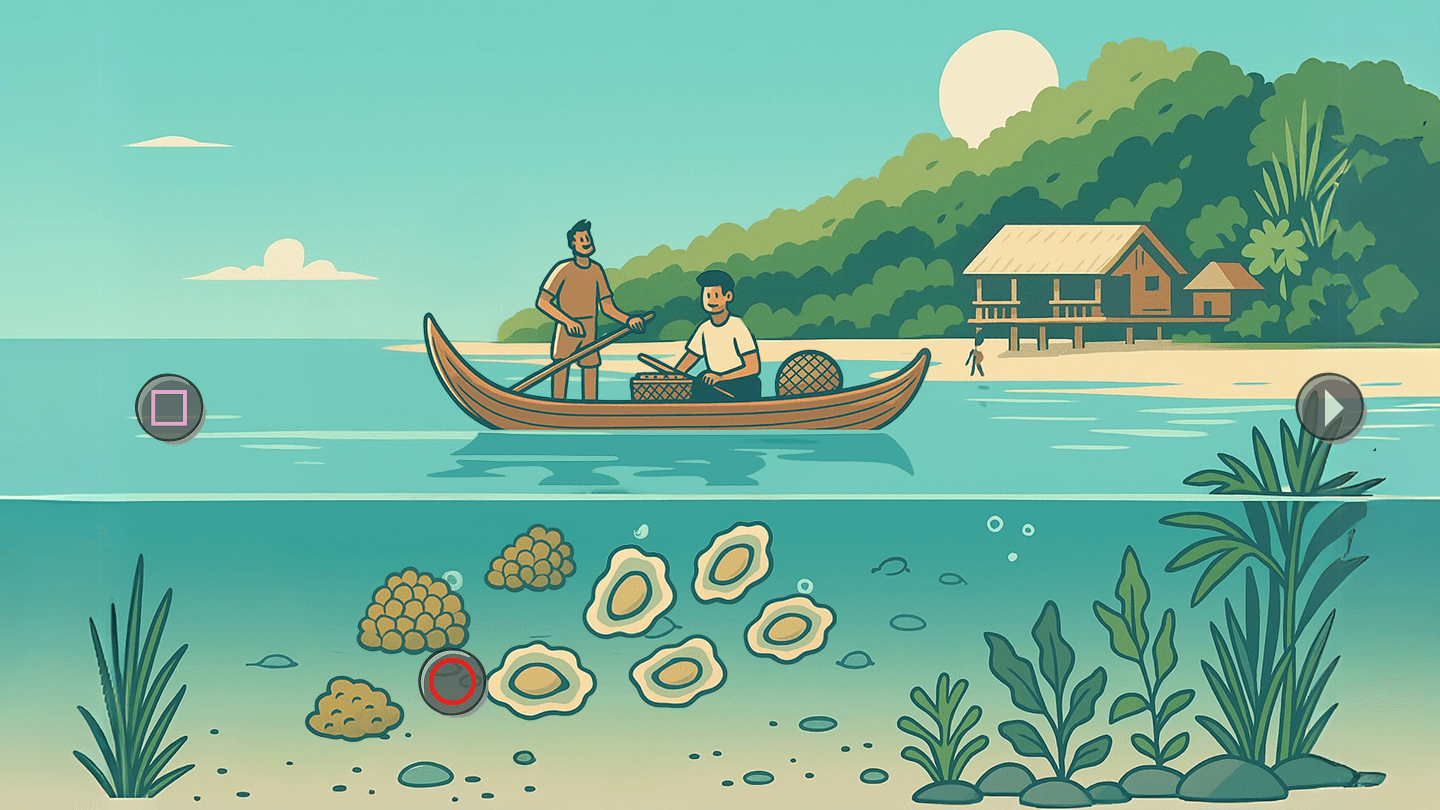
Overview
City Island: A Digital Exhibition Experience was created as part of the Prototyping and User Experience course in my master’s program, where I explored interactive storytelling and spatial design in digital museum environments. In response to the theme “Islanding New York,” our team designed an immersive, projection-based exhibit showcasing the past, present, and future of City Island, a maritime community in New York.
I conducted research on the island’s history and interactive exhibition methods, which informed a user-centered narrative experience. I mapped the user journey, defined key interaction points, and crafted a content strategy that balanced cognitive engagement with emotional impact, inviting visitors to reflect on cultural identity and climate change.
My Role
As the project manager in a four-person team, I led the ideation process, conducted research on City Island’s history and interactive exhibition practices, and structured the narrative across past, present, and future timelines. I created a detailed storyboard, mapped the user journey, and defined how visitors would engage with key elements with a gamepad interface. Throughout the project, I managed the timeline, delegated tasks, and ensured smooth coordination among team members. I developed the final interactive prototype using Figma, integrating visual and video assets to simulate the full exhibition experience. Additionally, I edited the video content, co-wrote the narration scripts, and produced AI-generated voiceovers to deliver an emotionally engaging, and multi-sensory storytelling experience.
Timeline
Apr 2025 - 5 weeks
Tools
Figma
Miro
Gamepad
Adobe Premiere
From Insight to Idea
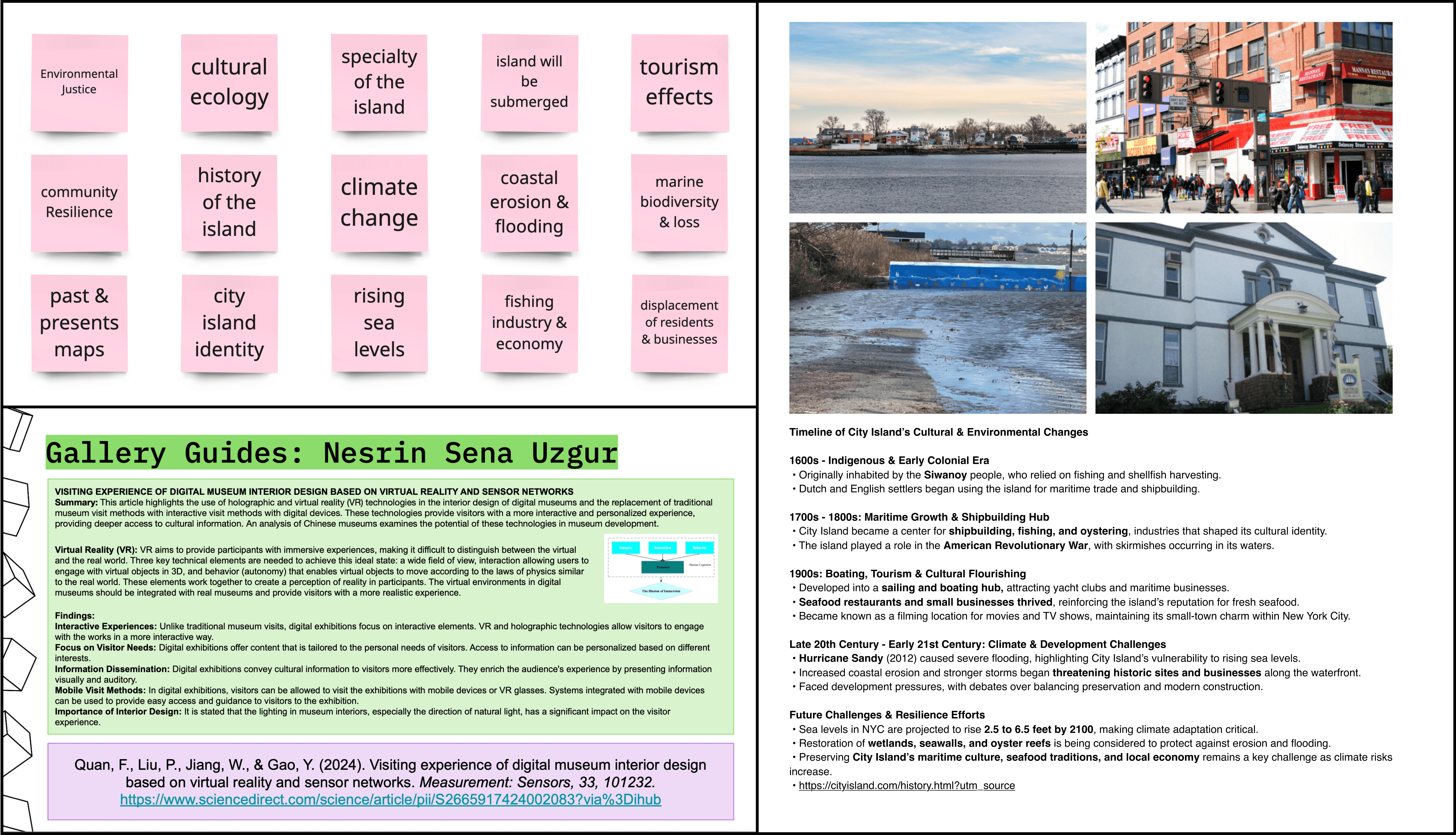
We began the project with collaborative brainstorming sessions, using post-its and quick sketches to explore how we might approach the theme of “Islanding New York.” After discussing several NYC islands, we chose City Island for its maritime heritage and vulnerability to climate change. We then shaped a narrative framework centered on three symbolic elements—boats, oysters, and people—to guide visitors through an immersive, time-based experience.
To ground our concepts in theory, we reviewed academic papers on interactive exhibition design. As a class, we reviewed academic papers on interactive exhibition design. Each of us summarized one paper, and we compiled our insights into a shared document that became a valuable reference during concept development.
Site Visit and Field Observations
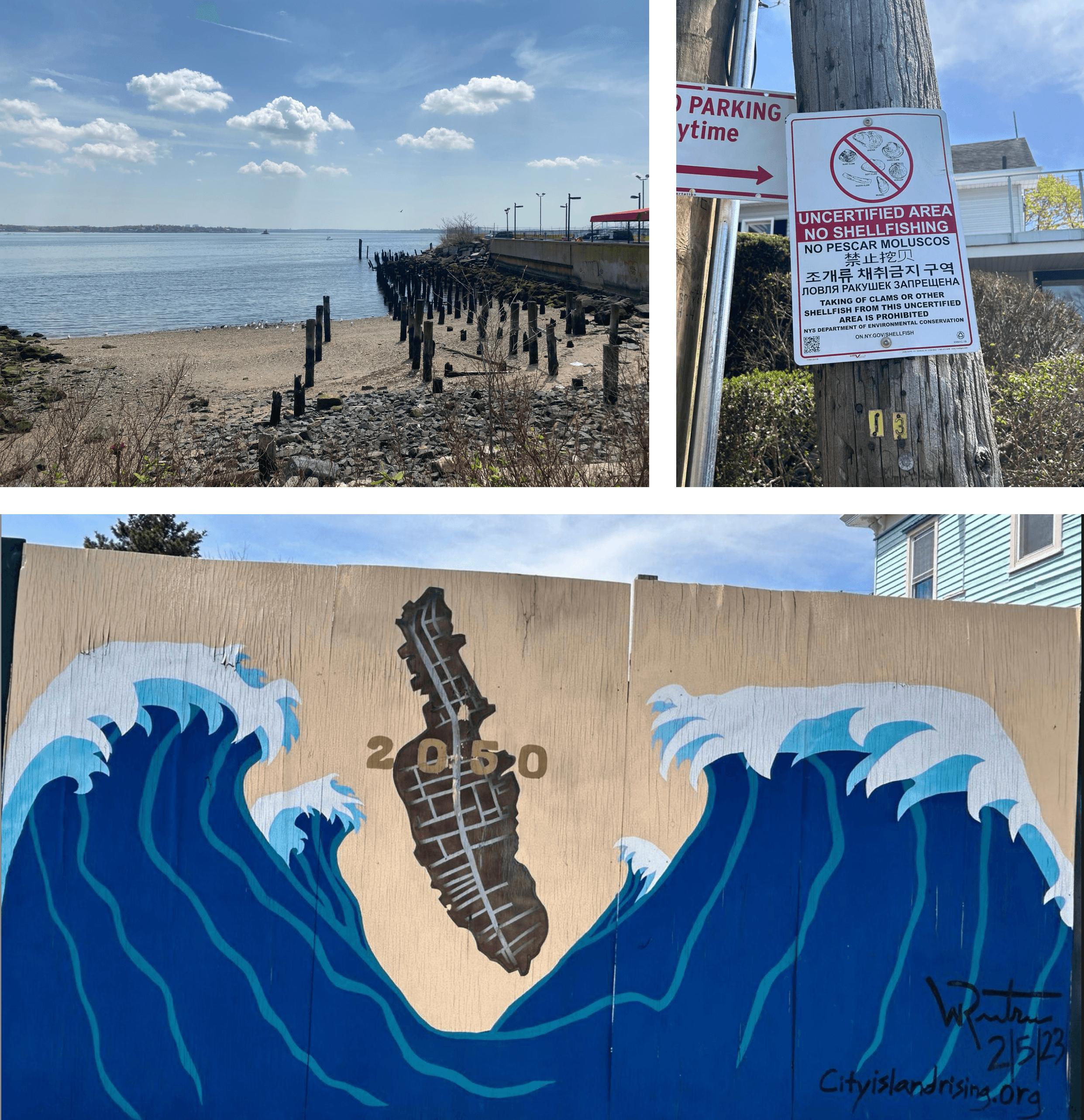
As a team, we visited City Island to gather firsthand insights for our exhibition. Known for its maritime history and oyster beds, the island revealed both cultural depth and environmental challenges. Through photos, videos, and conversations with locals, we observed beach pollution, the loss of oyster habitats, and concerns about public access. These findings shaped both the visual style and the emotional message of our project, emphasizing the importance of awareness, conservation, and a deeper connection to place.
Concept Development
After visiting City Island, we began developing the core idea for our exhibition. Inspired by the island’s maritime past and ecological challenges, we crafted a time-based narrative guided by a virtual oyster character. The story explored City Island’s past, present, and future through three symbolic elements—boats, oysters, and people.
I contributed to the narrative structure, co-wrote the script, and helped shape how visitors would emotionally engage with the story.
Designing the Experience
Interaction Design:
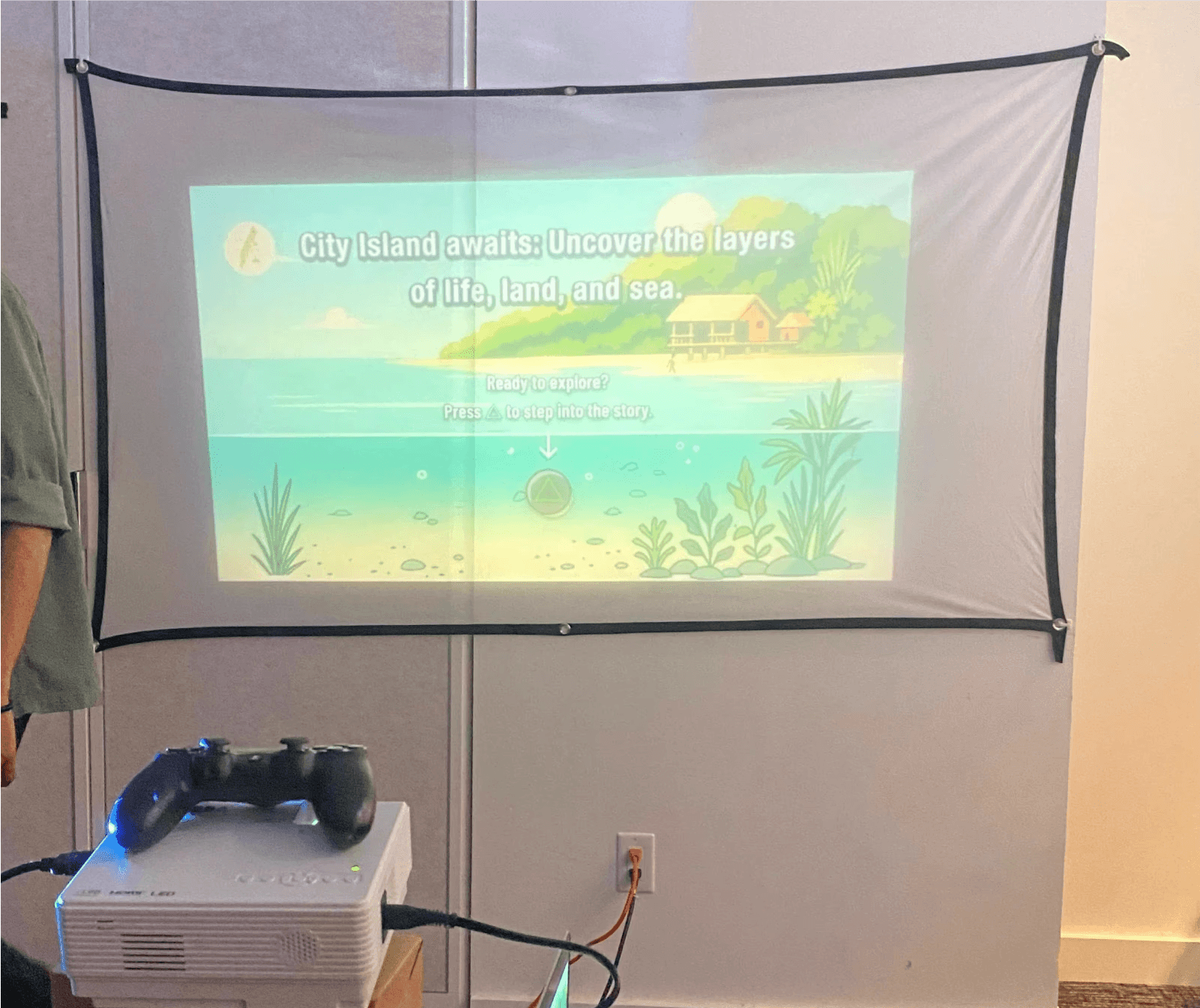
We developed an interaction system based on a gamepad, allowing visitors to seamlessly navigate through the timeline and select key narrative elements. The interface was carefully structured to encourage exploration and reflection, balancing usability with emotional engagement.
Prototyping:
Using Figma, I created a fully interactive prototype that simulated the exhibition experience. This prototype integrated visual and video assets, interactive hotspots, and navigation controls, providing a realistic preview of how visitors would engage with the exhibition.
Visual & Audio Design:
I edited the majority of the video content to ensure smooth transitions and clear storytelling. We designed the visual identity of the oyster narrator as a team, including its on-screen presence and transitions. To enhance the atmosphere, I added ambient overlays and subtle animations to deepen emotional immersion.
User Testing & Iteration:
We tested the prototype as a team, focusing on how wall placement and lighting affected the experience. Based on these tests, I improved navigation, visual clarity, and timing to create a smoother and more immersive exhibition.
Additional Contributions:
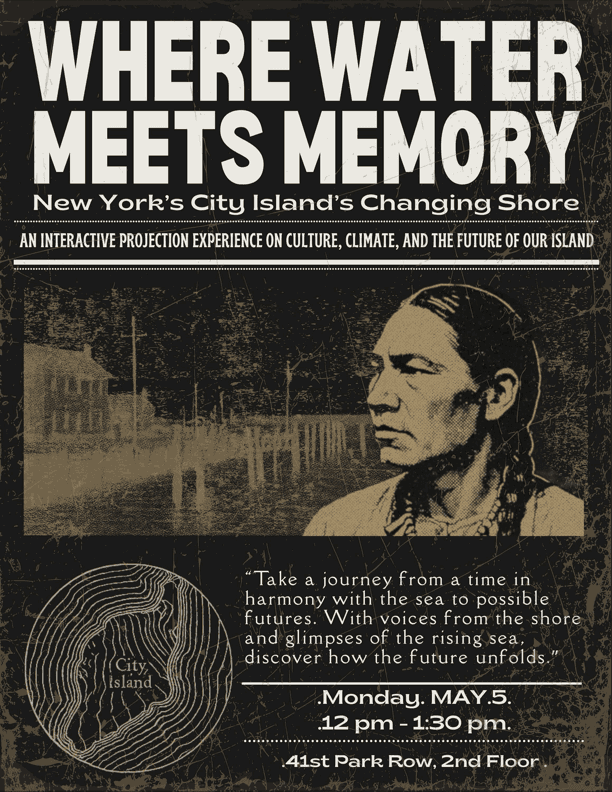
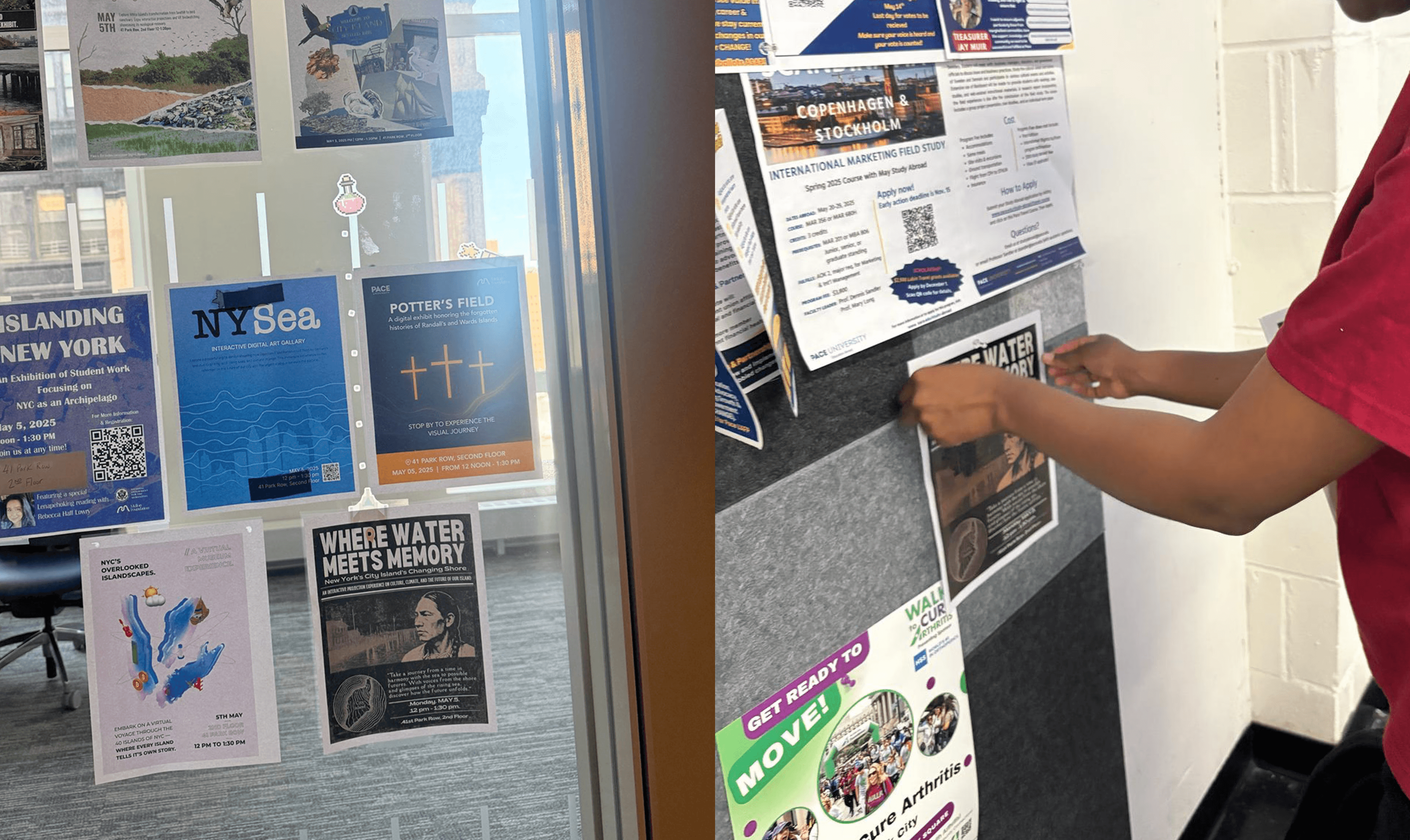
We also designed a promotional flyer to support the final exhibition presentation, ensuring visual consistency with the exhibition’s aesthetic.
Final Exhibition Delivery
The completed exhibition was presented as a projection-based, multi-sensory experience combining storytelling, interaction, video, and sound. I oversaw the integration of all components to ensure a cohesive and immersive narrative journey, and helped present it during our class showcase.
What I Took Away
This project pushed me to think beyond the screen, to consider how people move, feel, and connect in a physical space. I learned that storytelling is not just about words or visuals, but also about timing, transitions, and interaction. Most importantly, I saw how powerful design can be in creating empathy around real-world issues like climate change.
Thank you for exploring this project! I aimed to highlight a thoughtful, user-centered research approach throughout the process :)